SAP, IIoT, CRM and third-party data on one platform, without governance becoming the bottleneck. The more heterogeneous your data landscape, the less a manually configured Databricks setup can keep up.
This whitepaper shows how to build an enterprise-ready Databricks Lakehouse in which every resource is provisioned as code: from the Azure infrastructure to catalogs, grants and cluster policies. Reproducible, auditable and ready for many teams.
What you will receive:
-
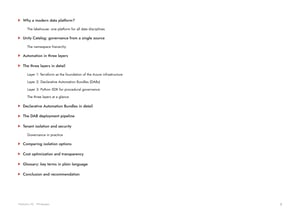
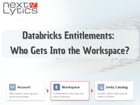
Unity Catalog as the central governance layer: namespace hierarchy, privilege inheritance, data lineage and row- and column-level access control
-
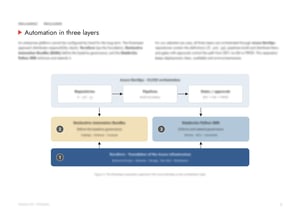
A three-layer automation approach with Terraform, Declarative Automation Bundles (DABs) and the Databricks Python SDK, orchestrated via Azure DevOps from DEV via QA to PROD
-
Three tenant isolation models compared, with a clear recommendation for the enterprise standard
-
Levers for cost control: cluster policies, tagging and chargeback, and storage optimization with Delta Lake
-
A glossary that explains the key terms in plain language for decision-makers
Why it matters: With these patterns, onboarding a new project drops from weeks to hours, and every change to the platform is documented and traceable. The approaches come straight from NextLytics enterprise projects, a solid foundation whether you are still weighing your options or already planning in concrete terms.